
This would imply a 29 per cent year-on-year rise, significantly lower than growth rates seen in recent years.

The World Bank has increased India's economic growth projection for FY27 to 6.6 per cent, citing resilient domestic demand, while simultaneously cutting its global economic growth outlook due to the conflict in West Asia.

S&P Global Ratings projects India's economic growth to slow to 6.6 per cent in FY27, down from 7.7 per cent in FY26, citing energy stress and a potential sub-par monsoon.

The primary objective should be to figure out a way to grow at 7 to 7.5 per cent with inflation around 4 per cent. Any policy that can help us get there must be experimented with. Those that work should stay. Those that do not should go, suggests Karan Bhasin.

India's manufacturing sector growth slowed to a four-year low in March, impacted by cost pressures, competition, market uncertainty, and the Middle East conflict, according to the HSBC India Manufacturing PMI.

Loans to micro, small and medium enterprises (MSMEs) in India saw moderated growth in April 2026, with early signs of stress emerging among micro borrowers and manufacturers, according to a report by credit bureau CRIF High Mark. The slowdown is attributed to potential impacts of global uncertainty.

India's eight core infrastructure sectors experienced a significant slowdown in production growth, reaching a seven-month low of 0.5 per cent in May, primarily driven by negative growth in coal, crude oil, and refinery products.

India's toll collection growth is projected to moderate to 5-7 per cent year-on-year in FY27, a 150-200 basis points reduction, primarily due to the economic impact of the West Asia conflict and a slowdown in commercial traffic, according to Crisil Ratings.

Indian mutual funds have significantly reduced their exposure to the information technology (IT) sector, with holdings now at an eight-year low of 6.7% in April 2026, driven by weak earnings growth, global demand slowdown, and concerns over AI-led disruption.
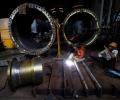
India's industrial production growth decelerated to a five-month low of 4.1 per cent in March, primarily due to the subdued performance of the manufacturing and power sectors, exacerbated by the West Asia crisis.

Bharat Forge reported modest Q4FY26 results but provided strong guidance, anticipating significant growth from its defence, aerospace, and data centre segments, with a projected 25 per cent revenue growth in Indian manufacturing for FY27, despite current high valuations.

Indian startup funding plummeted by 43 per cent year-on-year to $7.81 billion between March 1 and June 15, 2026, largely due to the West Asia conflict, which has amplified global risk perceptions, tightened liquidity, and led to rupee depreciation, making global investors cautious.
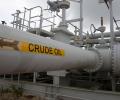
Production growth in India's eight core infrastructure sectors slowed to a three-month low of 2.3 per cent in February, impacted by contractions in crude oil, natural gas, and refinery products output.

Godrej Properties closed FY26 with record bookings and presales, exceeding its annual guidance, but brokerages express concerns over weak cash-flow generation and the ability to sustain growth amidst a muted real estate market.

'While salary increments are moderating compared to last year, not all functions are moving at the same pace.'

India's remittance inflows have remained robust despite the West Asia conflict, driven by precautionary transfers and diversification of remittance sources, with bankers expecting continued stability for the year.

India's services sector growth slowed in March, reaching a 14-month low, according to the HSBC India Services PMI. The slowdown reflects weaker new business intakes and rising input costs, particularly in fuel, transport, and logistics.

India's services sector growth reached a five-month high in April, with the HSBC India Services PMI Business Activity Index rising to 58.8, primarily driven by robust domestic demand and a shift from international to local suppliers amidst the West Asia crisis.

The Nifty 50 firms' contribution to the overall earnings of India Inc has steadily declined, reaching its lowest share in at least 21 quarters at 47.1 per cent in Q4FY26, down from 51.8 per cent a year earlier.

The Reserve Bank of India (RBI) has projected a 6.9 per cent GDP growth for the current financial year, citing concerns over commodity prices and supply chain disruptions stemming from the West Asia crisis.

Reliance Industries Ltd (RIL) has expressed caution regarding 'extreme volatility' risks stemming from the West Asian conflict, which could impact global oil demand and the company's margins, while also noting that near-term retail consumption demand may remain sensitive to macro conditions. Chairman Mukesh Ambani, in the annual report, remained silent on the timeline for Jio Platforms' anticipated public listing, stating the group will 'continue to evaluate strategic pathways'.

Net mutual fund inflows into active equity schemes in India plummeted by 40 per cent month-on-month in May, reaching a one-year low of 22,908 crore, primarily due to weaker lump-sum investments and increased redemptions amidst significant market volatility and global uncertainties.

New demat account additions in India reached an 11-month low in March, with only 2.15 million new accounts opened, significantly below the 12-month average. This slowdown is attributed to a sharp decline in equity markets, escalating West Asia tensions, and increased crude oil prices impacting India's economic outlook.

India's economy is projected to maintain growth above 7 per cent in 2026-27 (FY27), supported by strong domestic consumption and investment, even as global growth faces risks from geopolitical tensions, according to industry body Assocham.
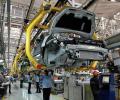
India's passenger vehicle (PV) industry is projected to experience moderated growth in FY27, following a strong rebound in H2FY26, primarily due to the high base effect, absorbed pent-up demand, and the lingering impact of geopolitical tensions in West Asia.

S&P Global Ratings warns that a sustained rise in crude oil prices to $130 per barrel could significantly slow India's economic growth, weaken fiscal metrics, and strain corporate and banking sector performance, potentially reducing growth by up to 80 basis points.
India's services sector experienced its strongest growth in six months in May, with the HSBC India Services PMI Business Activity Index rising to 59.8. This expansion was driven by healthy demand, new client acquisitions, and improved new business intakes, alongside a softer rise in cost burdens.

'The real money in India over the coming period is likely to be made in small-cap stocks rather than in the large-cap benchmark names.'

Moody's Ratings has downgraded India's growth forecast for financial year 2026-27 (FY27) to 6 per cent from 6.8 per cent, attributing the revision to weaker consumption and industrial activity, elevated energy prices, and rising input costs stemming from the West Asia conflict.

India's eight core infrastructure sectors experienced a slowdown in production growth, reaching a two-month low of 4% in January. Crude oil and natural gas output declined, while refinery products remained flat. Overall growth for the April-January period was also lower compared to the previous fiscal year.

Indian companies are increasingly opting for demergers, with 29 deals valued at over $40 billion in 2025 alone, marking a 10-year high, as promoters and boards recognise that markets favour focused businesses over complex conglomerates.
India Ratings and Research predicts the Reserve Bank of India (RBI) will maintain the repo rate at 5.25 per cent throughout FY27, despite potential inflationary pressures from higher fuel prices, with inflation expected to remain within the central bank's tolerance band.
A foreign brokerage warns that sustained crude oil prices above USD 100 per barrel could push India's inflation above the RBI's tolerance level, potentially triggering interest rate hikes.

India's top 16 IT services companies distributed a record 1.3 trillion to shareholders in FY26 through dividends and share buybacks, a 36.3 per cent increase from FY25, even as the industry grappled with AI-driven business model threats and a significant decline in market capitalisation.

Amidst a sharp run-up in gold and silver prices, investors are advised to rebalance their portfolios by booking partial profits in precious metals and reallocating to domestic equities and debt, according to financial experts.

The unprecedented rally in artificial intelligence (AI)-linked stocks has led to Indian companies being excluded from the top 10 constituents of the MSCI Emerging Markets (EM) Index for the first time in over two decades, raising concerns about concentration risk.

Discount retailer DMart (Avenue Supermarts) hit its highest levels in a year and a half last week and is up over 11 per cent in the last one month. The company depends on low operating costs to offer the lowest prices to consumers, which enables sales velocity and scale, further reducing costs. This virtuous feedback loop has helped DMart gain market share in a sector dominated by unorganised stores.
India's services sector experienced a slight moderation in growth during February, according to the HSBC India Services PMI Business Activity Index, with new order growth slowing and inflation picking up.

New completions in India's office real estate sector fell by 36 per cent to 9.7 million square feet in Q1 2026, the lowest in four quarters, primarily due to developers adopting a cautious stance amid global uncertainties, particularly in Bengaluru, Hyderabad, and Mumbai. Despite this, office absorption increased by 20 per cent, indicating strong occupier demand.
